ASSOCIATE OF APPLIED SCIENCE IN ARTIFICIAL INTELLIGENCE
Associate Degree Program
Duration: 2 Years
Format: Live Online, On-Campus, or Hybrid
Delivery: Instructor-Led Lectures | Programming Laboratories | Artificial Intelligence & Machine Learning Laboratories | Data & Database Laboratories | Linux & Virtualization Laboratories | Applied Industry Projects | Capstone Project
Program Overview
The Associate of Applied Science in Artificial Intelligence at Texas Business School is a two-year, workforce-focused technology program designed to prepare students with the academic foundation, technical knowledge, practical competencies, and professional skills required to support the development, implementation, testing, deployment, and improvement of artificial intelligence solutions.
Students develop knowledge and practical skills in Python programming, data preparation, machine learning, databases, computer vision, natural language processing, generative AI, cloud and virtualized environments, robotics, and deep learning. The program also develops mathematical, analytical, ethical, research, communication, and professional skills needed to work effectively within multidisciplinary technical teams.
Through instructor-led instruction, programming laboratories, artificial intelligence and machine learning laboratories, data and database laboratories, Linux and virtualization laboratories, applied industry projects, and a culminating capstone project, students gain extensive hands-on experience applying modern artificial intelligence methods and tools to technical and organizational problems.
The program places a strong emphasis on practical technology skills, responsible AI use, problem-solving, technical communication, professional software-development practices, and applied project development.
Why Study This Program?
Hands-On AI & Programming Training
Students develop practical technical skills through programming laboratories and artificial intelligence and machine learning laboratories. Training includes Python programming, machine learning, data analysis, computer vision, natural language processing, generative AI, neural networks, and other AI applications.
Practical Data & Database Skills
Students learn how to collect, organize, clean, transform, validate, and analyze datasets while developing practical database and SQL skills. The curriculum includes relational database design, SQL queries, data integration, visualization, feature engineering, and preparation of datasets for artificial intelligence applications.
Cloud, Linux & Virtualization Experience
Students gain practical experience using Linux/UNIX environments and virtualized and cloud-based computing environments. Laboratory activities include Linux configuration, shell scripting, virtual machine deployment, cloud computing, storage configuration, containers, access controls, and AI development environments.
Applied Industry Projects & Capstone
Students apply their technical knowledge to industry case studies and practical AI projects across areas such as business, healthcare, finance, manufacturing, transportation, cybersecurity, logistics, education, and government. The program concludes with an integrated capstone project requiring students to design, develop, evaluate, document, and present an applied artificial intelligence solution.
Program Learning Outcomes
Upon successful completion of the program, graduates will be able to explain the history, principles, terminology, architectures, capabilities, and limitations of artificial intelligence systems and apply computational thinking and structured problem-solving techniques to technical and organizational problems.
Graduates will be able to develop Python programs using appropriate programming structures, libraries, debugging practices, documentation, and version-control methods; apply mathematical and statistical concepts to AI, machine learning, and data-analysis problems; and collect, organize, clean, transform, validate, and analyze structured and unstructured datasets.
Graduates will be able to design relational databases and use SQL to manage data; develop and evaluate supervised and unsupervised machine-learning models; apply feature engineering, data preprocessing, model selection, parameter tuning, and error-analysis methods; and develop introductory computer-vision, natural language processing, generative AI, neural-network, and deep-learning solutions.
Graduates will also be able to configure Linux/UNIX, virtualized, and cloud-based computing environments; apply AI techniques to cybersecurity monitoring and security analytics; explain robotics and intelligent-system concepts; and analyze AI applications across multiple industries.
Graduates will demonstrate the ability to apply responsible-AI principles involving fairness, bias, privacy, security, transparency, accountability, explainability, and human oversight. They will also be able to communicate technical information effectively, work independently and within multidisciplinary teams, and design, develop, evaluate, document, and present an integrated applied artificial intelligence solution.

What You’ll Learn
Artificial Intelligence Foundations
Students develop a foundation in the history, theories, terminology, architectures, technologies, platforms, and major subfields of artificial intelligence. Topics include intelligent agents, search, reasoning, knowledge representation, machine learning, neural networks, natural language processing, computer vision, robotics, and generative AI.
Python Programming for AI
Students develop Python programming competencies required for artificial intelligence, machine learning, data analysis, automation, and technical computing. Practical training includes programming structures, functions, data collections, file processing, exception handling, debugging, documentation, scientific-computing libraries, data manipulation, and version control.
Machine Learning & Data Science
Students learn machine-learning workflows, dataset preparation, regression, classification, clustering, decision trees, model evaluation, feature engineering, model comparison, data acquisition, cleaning, transformation, visualization, statistical analysis, and dataset validation.
Computer Vision, NLP & Generative AI
Students develop practical skills in image processing, image classification, object detection, video analysis, natural language processing, text classification, sentiment analysis, embeddings, semantic search, retrieval, prompt engineering, large language models, and generative-AI applications.
Databases, Linux, Cloud & Virtualization
Students learn relational database design, SQL, normalization, queries, joins, aggregation, database security, and Python/database integration. The program also covers Linux/UNIX environments, command-line operations, shell scripting, virtual machines, cloud computing, virtual networking, storage, containers, access controls, and AI development environments.
Robotics & Intelligent Systems
Students explore robotics, sensing, intelligent control, autonomous systems, intelligent navigation, human-machine interaction, and AI-enabled robotic applications. Laboratory activities include robot programming, sensor configuration, movement control, obstacle avoidance, path planning, computer-vision integration, and autonomous navigation.
Responsible Artificial Intelligence
Students examine ethical and responsible-technology principles involving fairness, bias, privacy, surveillance, transparency, accountability, human dignity, social impact, and responsible innovation. The curriculum emphasizes responsible AI throughout the development and application of intelligent technologies.
Applied AI & Industry Projects
Students examine AI applications across business, healthcare, finance, manufacturing, transportation, cybersecurity, logistics, education, government, and other sectors. They learn to analyze organizational problems, identify AI use cases, assess feasibility, develop prototypes, define performance expectations, and plan responsible AI solutions.
Capstone Project & Professional Portfolio
The program concludes with a 90-hour applied capstone project. Students identify a real-world or simulated problem and develop an AI solution involving requirements analysis, data preparation, technical architecture, programming, model development, testing, evaluation, documentation, responsible-AI assessment, and technical presentation while developing a professional portfolio demonstrating their technical progression.
Career Opportunities
Graduates may pursue entry-level opportunities in artificial intelligence, data, software, technology, automation, cybersecurity, cloud computing, and other technology-related environments requiring AI and computing skills. Potential career pathways may include AI support and development roles, junior data and analytics roles, machine-learning support roles, AI operations roles, technical support roles, and other entry-level technology positions aligned with the graduate’s skills and employer requirements. Graduates may also apply their skills across business, healthcare, finance, manufacturing, transportation, cybersecurity, logistics, education, government, and other sectors using artificial intelligence technologies. Actual job titles, responsibilities, employment requirements, and scope of duties may vary depending on the employer, industry, and work setting.
Admission Requirements
Applicants should possess a High School Diploma or equivalent or meet the applicable admission requirements for associate-degree-level study.
Appropriate mathematics, college-level reading and writing, and computing readiness are required or recommended as specified by the applicable courses.
International applicants may be required to submit additional documentation in accordance with institutional and regulatory requirements.
Tuition & Study Options
Program Duration
2 Years / 4 Semesters
Study Options
Live Online | On-Campus | Hybrid
Tuition
$12, 000
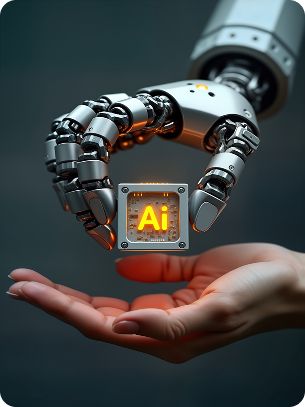
Start Your Career in Artificial Intelligence
Organizations across industries increasingly use artificial intelligence to support analysis, automation, decision-making, security, customer services, research, and other technical and organizational activities.
The Associate of Applied Science in Artificial Intelligence at Texas Business School combines academic foundations, programming laboratories, AI and machine-learning training, data and database practice, Linux and cloud environments, applied industry projects, and a culminating capstone experience to help students develop practical competencies for entry-level AI-related technology roles.



NEWS & EVENTS
Stay Connected
Keep up with the latest academic announcements, admissions updates, student achievements, new program launches, workshops, and institutional events at Texas Business School.